
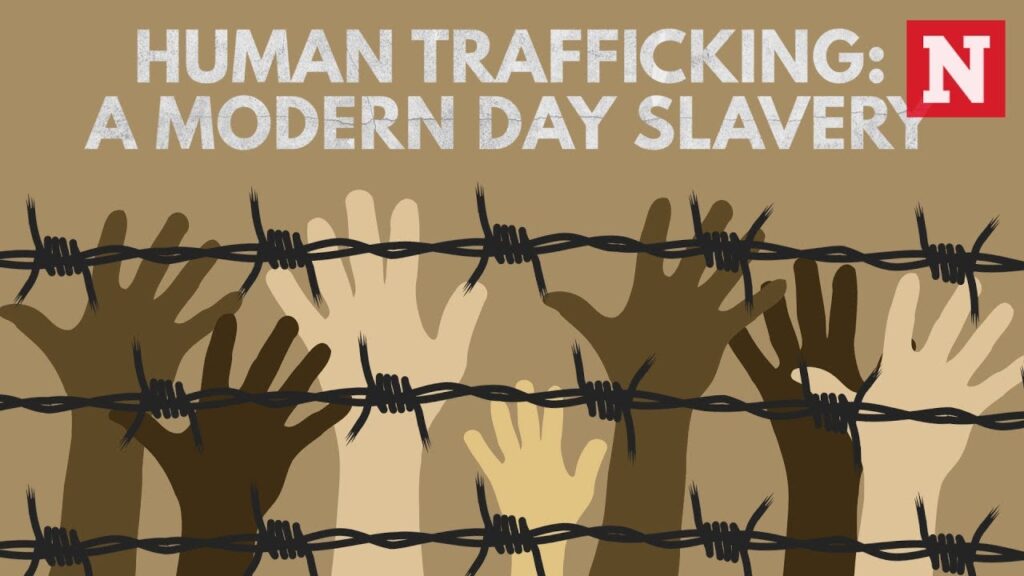
Modern slavery refers to contemporary forms of exploitation where individuals are subjected to various forms of forced labor, servitude, or practices similar to historical slavery. Human trafficking involves the recruitment, transportation, transfer, harboring, or receipt of individuals through force, coercion, or deception for the purpose of exploitation.
Unlike traditional slavery, modern slavery may not always be legally sanctioned or involve ownership of individuals, but it still encompasses situations where people are exploited, controlled, and deprived of their freedom.
Forms of modern slavery include forced labor, debt bondage, human trafficking, and other practices where individuals are coerced or deceived into working under exploitative conditions. This can occur in various industries such as agriculture, manufacturing, construction, and the service sector.
Human trafficking involves the recruitment, transportation, transfer, harboring, or receipt of individuals through force, coercion, or deception for the purpose of exploitation. It is a criminal activity that exploits people for forced labor, sexual exploitation, or other forms of involuntary servitude.
Human trafficking is a complex and transnational crime that can affect men, women, and children. Victims are often vulnerable individuals who are targeted by traffickers seeking to profit from their exploitation. This crime can occur within a country or involve the movement of individuals across borders.
Modern Slavery:
Modern slavery refers to contemporary forms of forced labor, servitude, or human exploitation that can take various forms. Victims of modern slavery may be subjected to deceptive recruitment, physical or psychological coercion, and restrictions on their freedom. This includes forced labor in industries such as agriculture, manufacturing, construction, and domestic work. Modern slavery is a global issue that affects millions of people, and it is a violation of fundamental human rights.
Human Trafficking:
Human trafficking involves the recruitment, transportation, transfer, harboring, or receipt of individuals through force, fraud, or coercion for the purpose of exploitation. This exploitation can take the form of forced labor, sexual exploitation, involuntary servitude, or other forms of abuse. Human trafficking is a complex and clandestine crime that occurs across borders and involves criminal networks. It is a gross violation of human dignity, often preying on vulnerable individuals who may be seeking better economic opportunities or fleeing conflict.
Efforts to combat modern slavery and human trafficking involve international collaboration, legal frameworks, and awareness campaigns. Governments, NGOs, and various stakeholders work together to identify and rescue victims, prosecute perpetrators, and prevent further instances of these egregious violations of human rights.
Reports
The report highlights a concerning rise in modern slavery and human trafficking in the UK, with 7,936 referrals for potential victims in the year ending December 2022, marking a 10.3% increase from the previous year. Exploitation occurs in various sectors, such as construction, agriculture, the sex industry, nail bars, car washes, and cannabis farms, with children often found working in these conditions, including sexual slavery. Victims, both from the UK and overseas, face deceptive recruitment promising well-paid work and accommodation, only to endure exhausting, ill-paid, dangerous, and degrading conditions. The perpetrators employ threats, violence, and document confiscation to control victims, with some cases linked to larger organized crime groups involved in various criminal activities, including drugs and firearms trafficking Read More
The report defines modern slavery as a broad term encompassing human trafficking, slavery, servitude, and forced labor, emphasizing its infringement on fundamental human rights. Estimates indicate around 50 million people globally are living in slavery, contributing to the production of everyday goods and services. The International Labour Organisation notes the generation of hundreds of billions of illegal profits by traffickers annually. The UK Parliament adopts a proactive approach to combat modern slavery and corruption in its supply chains, aiming for transparency and collaboration with suppliers. Parliament asserts its commitment to preventing taxpayer funds from inadvertently supporting such criminal activities and emphasizes the right of all individuals to be treated with dignity and respect.Read more
The report outlines CPA UK’s commitment to combating modern slavery, human trafficking, and forced labor, aiming to enhance parliamentarians’ understanding and knowledge on these issues. Their objectives include educating parliamentarians, supporting legislation strengthening, and building a network of Commonwealth organizations to address the challenges in various jurisdictions. The focus is on providing space for skill enhancement, fostering understanding, and facilitating collaborative efforts. The report highlights the global scale of the problem, with one in 200 people experiencing some form of contemporary exploitation, emphasizing the role of parliamentarians in inspiring positive change and eradicating these crimes through legislative action, awareness raising, and oversight. Read more
The United Nations Office on Drugs and Crime (UNODC) launched a global report on trafficking in persons, providing the first comprehensive assessment based on data from 155 countries. The report reveals widespread denial and neglect by governments in reporting and prosecuting human trafficking cases, with two out of five countries not recording a single conviction. Sexual exploitation constitutes the most common form (79%), primarily affecting women and girls, while forced labor accounts for 18%. Children comprise almost 20% of all trafficking victims globally, with certain regions experiencing a majority of child victims. The report highlights the need for improved data collection and increased global efforts to combat human trafficking effectively.Read more
On the United Nations’ World Day Against Trafficking in Persons, new statistics reveal that reports of human trafficking and slavery to the Australian Federal Police (AFP) have reached the highest-ever recorded levels. The 2022 theme, ‘Use and Abuse of Technology,’ highlights technology’s dual role in facilitating and hindering human trafficking. In the 2021-22 financial year, the AFP received 294 reports, up from 224 in the previous year, with forced marriage, sexual servitude, forced labor, exit trafficking, and trafficking in children being the most reported crime types. The AFP is countering these crimes using technology, introducing the “Look-a-Little-Deeper” program for training and awareness across all frontline agencies, marking a historic initiative in Australian law enforcement. The Australian government is committed to combating human trafficking domestically and internationally.Read more
News
“Former Dorset detective launches human trafficking podcast “by BBC on 7 Feb 2024
“Modern slavery gangmasters exploit care worker shortage “by BBC on 25 July 2023
Research material
Research trends on human trafficking: a bibliometric analysis
Modern Slavery and Human Trafficking | IntechOpen
Event and Conferences
HL event on modern slavery and human trafficking – 191121
Events | Modern Slavery and Human Trafficking
International Day for the Abolition of Slavery | United Nations
Media
: Modern Slavery and Human Trafficking
: Modern Slavery and Human Trafficking